
The "immersive" museum that can only be seen by diving is opened
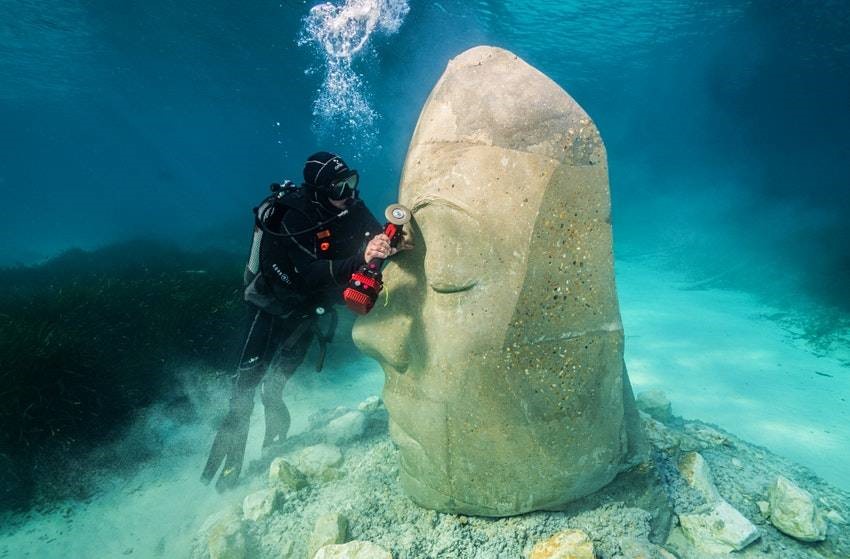
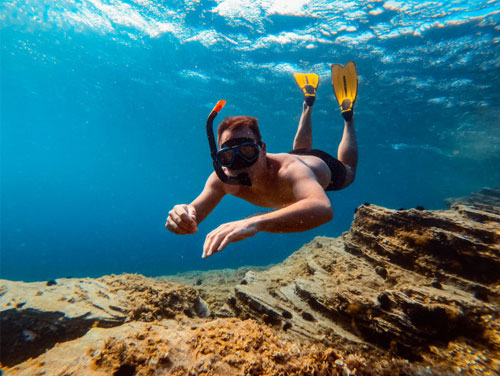
Snorkelers or divers who are now luckily on the coast of the French island of Île Sainte-Marguerite may not able to know hat they are facing a surreal scene: a group of huge gray faces, all of them close their eyes.
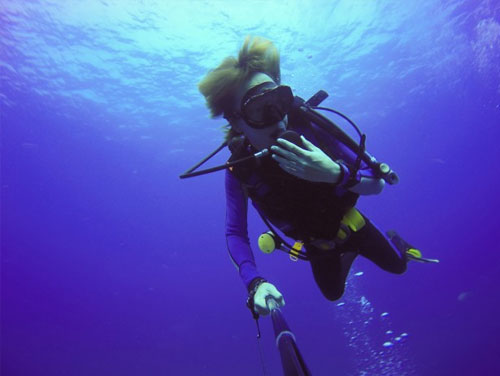
Divers are swimming towards the sculptures on seabed. These cement sculptures on seabed are part of the new "Underwater Museum" near Cannes built by British artist Jason deCaires Taylor. The sculpture is located 3 meters deep underwater and depicts the image of six local people, from an 80-year-old local fisherman to a 9-year-old elementary school student. Each sculpture is two meters high and weighs 12 tons.
The Cannes City Government funded this project with the purpose of appealing the public to realize the plight of the ocean. In order to place these sculptures, people cleaned up the obsolete facilities in this sea, including pipes, cables, and of course many marine debris.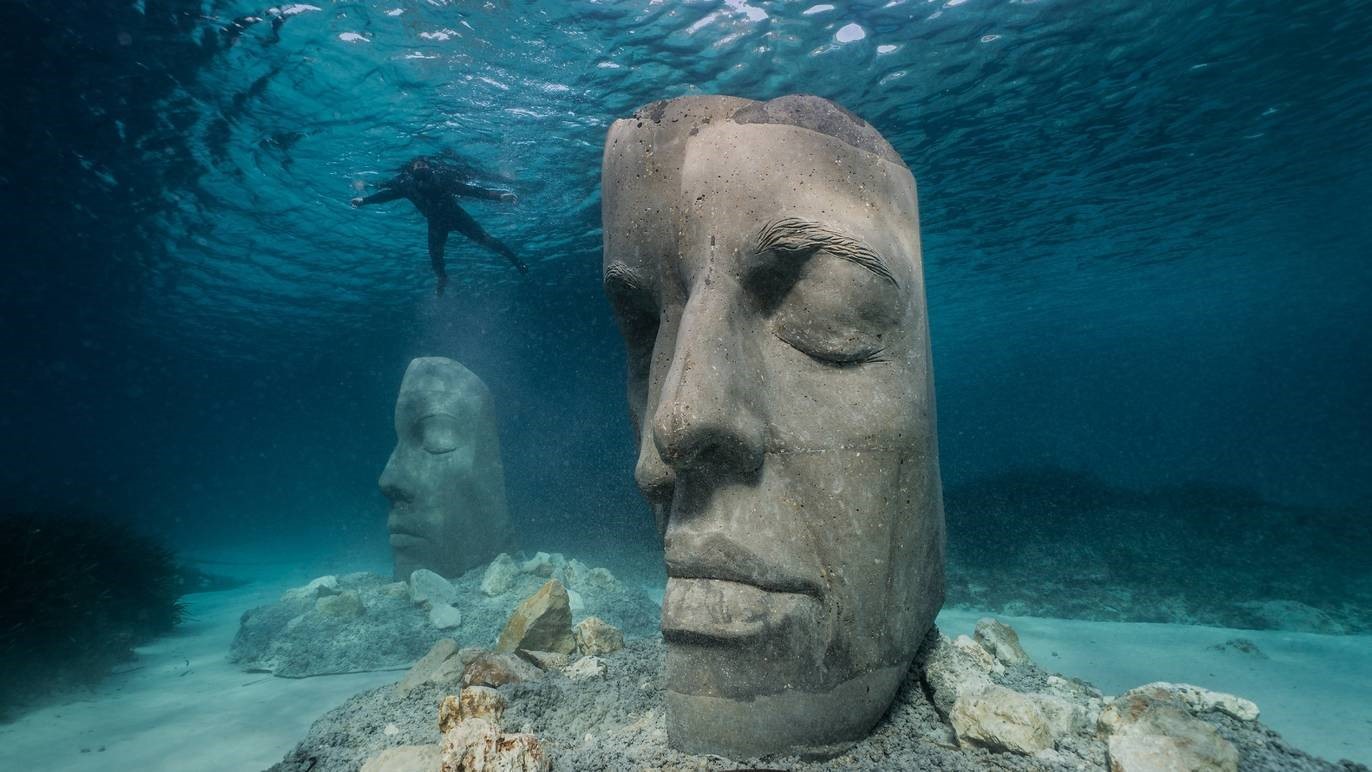
Jason de Carles Taylor, who was a diving instructor (his deeds was reported in Private Geography). In 2006, Taylor was determined to restart his career and picked up his college career and dream: sculpture creation, and combine it with the ocean he love. Over the years, many of his works have been exhibited underwater all over the world.
This time, Taylor spent four years creating these sculptures. He hopes that these face sculptures can also evoke debates about identity, public image and appearance. After all, the history of this island is closely related to the legend of the "Iron Masked Man" in French history.
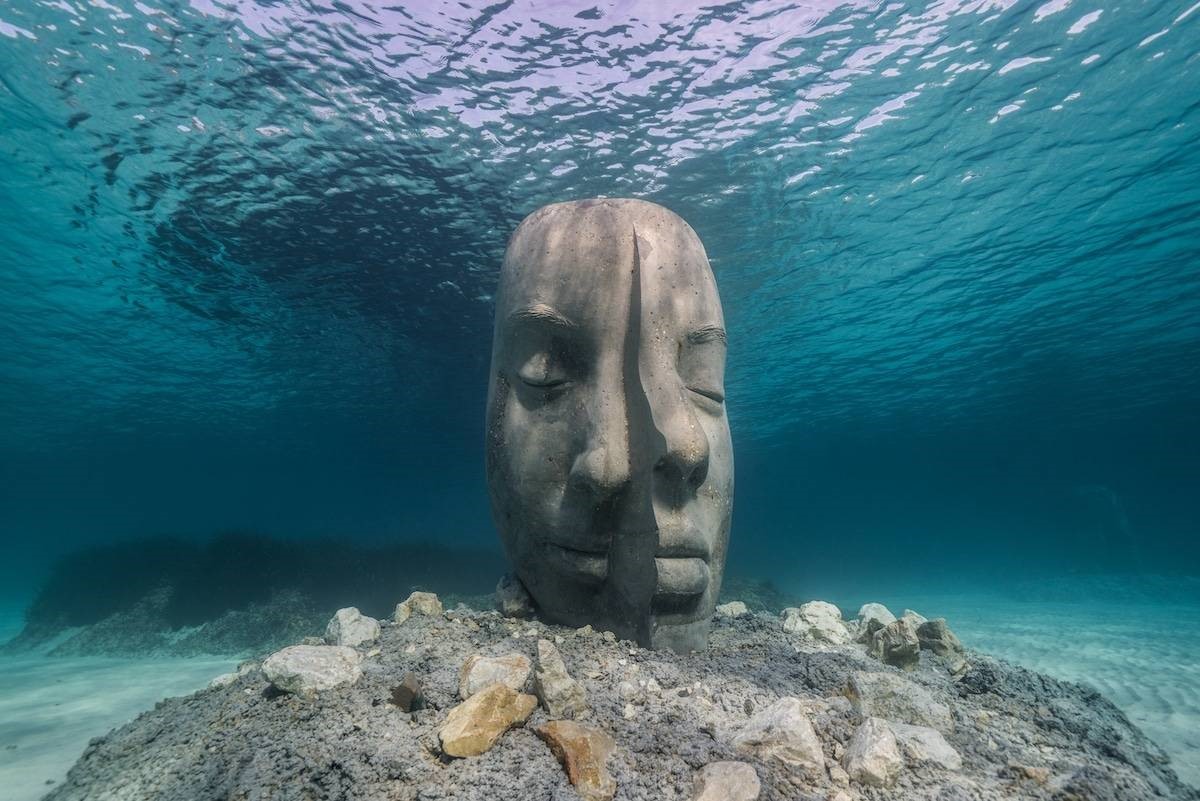
Just like works created underwater in other areas of the world, he also expects these statues to attract plants and animals to grow here. Taylor's art works are essentially artificial coral reefs, simulating natural rock formations that are conducive to coral growth, while not harming the marine ecological environment.
Each sculpture is made of non-toxic, pH-neutral cement and does not contain any harmful pollutants. These cements are quite durable and rough in texture, which can promote the growth of coral larvae. There are also small nooks and dark grids formed by "skin" or folds of clothing, providing homes for fish and crustaceans. Therefore, after being placed, they will gradually become an integral part of the local ecosystem.
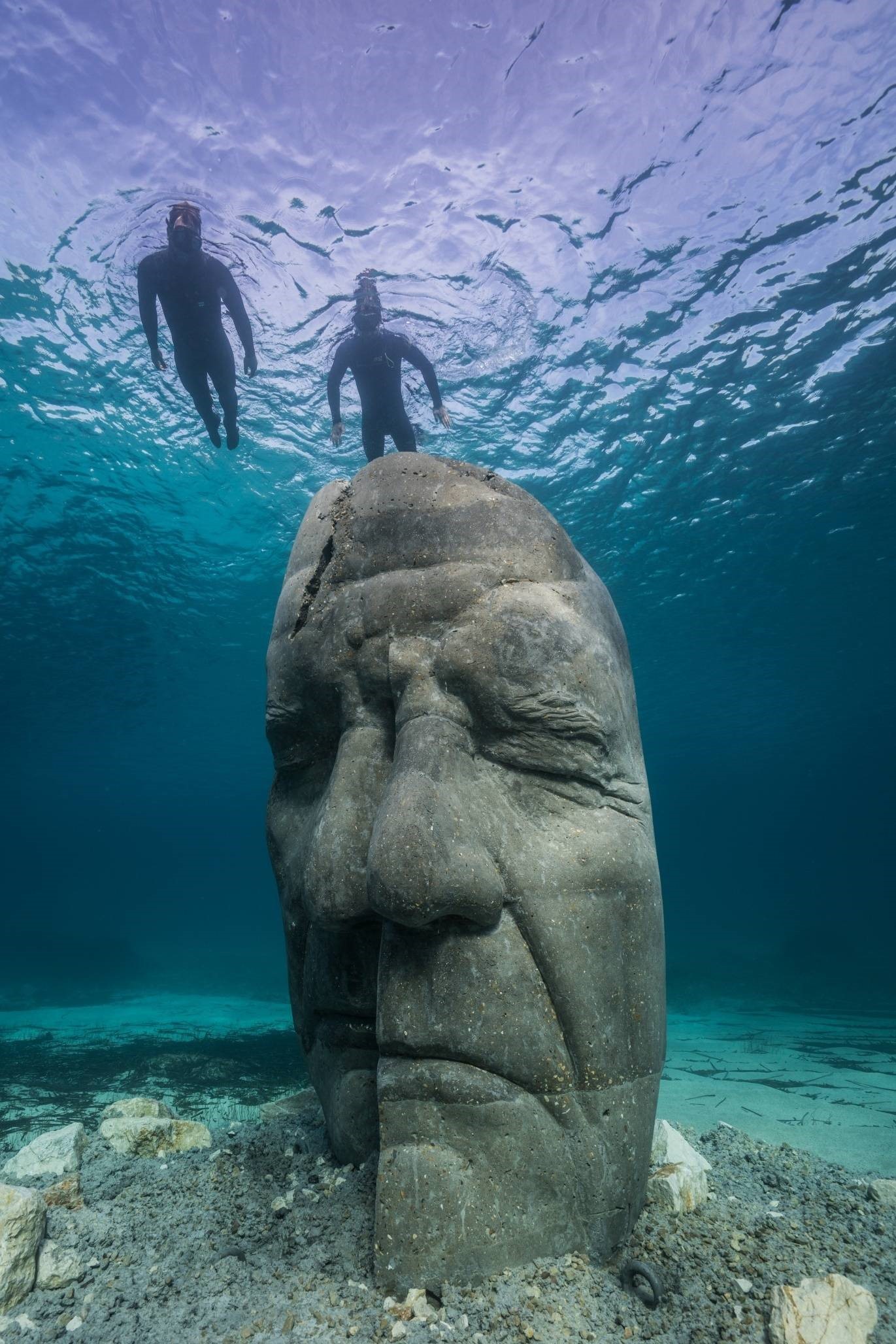
In past works, Taylor observed that it only takes a few days for young algae to begin to form, and then fish eat the algae, and the new ecosystem is developed. One month later, more obvious changes are reflected on the surface of the sculpture. When he watches closely, he saw the marble markings formed by polyps, worms, mollusks, and sponges.
Around the sculpture, more algae and aquatic plants were growing at an unusual speed, and soon attracted thousands of fish, hermit crabs, starfish and sea urchins to forage here...A few months later, soft corals and hard corals also came, and the shape of the sculpture became indistinct. We hope they can eventually become a paradise for marine life.
Now, this area is open to divers free of charge, and divers can swim freely among the statues and observe them. At the moment when social distancing is advocated, this is undoubtedly the safest way to "visit" museums. In the future, they may attract some divers who would have rushed to the natural coral reef and help the natural coral reef get some respite.


Send us an Email