
Swimming: How diving help Olympians to win Olympic gold medals
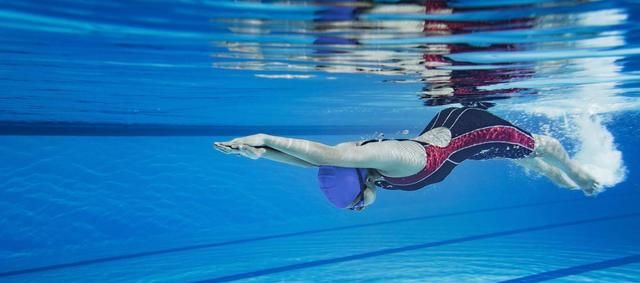
In order to win the swimming gold medal in Tokyo, swimmers not only need to use their arms and legs to generate incredible strength to push themselves forward in the water; they also need to overcome the resistance of the water.Neither can they wear special low-resistance suits, nor can they use technology to help them fly over the water. How can swimmers make the impact of water resistance as small as possible? The best athletes in the Tokyo Olympics will do this by diving rather than swimming on the water-at least to the extent permitted by the rules.
Waves are a kind of resistance
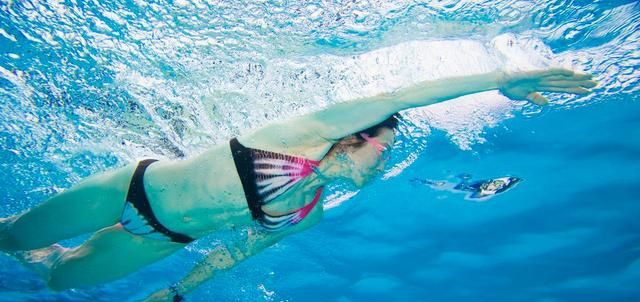
Water's density is large than air, so you might think that swimmers would benefit from using a technique that allows them to sit in the water and keep their bodies out of the water as much as possible.But this strategy has two problems. First of all, it takes energy to generate the force required to raise the body that are better used to push the swimmer forward towards the destination.Secondly, when we move on the surface of the water, we waste the energy to make waves. During fast swimming, for example, in sprint freestyle competitions or during starting and turning (speeds exceeding 2m/s, or about 7km/h), the generation of waves can slow the swimmer's speed more than any other factor. Therefore, reducing the formation of waves is essential for swimming success.When the pressure exerted by the swimmer on the water forces the water up and out of their path, waves are created. Other pressure changes around the swimmer's body can also cause waves to form behind them, sometimes on the sides.The energy required to generate the waves comes from the swimmer, so a large amount of energy generated by the swimmer's muscles is used for wave generation, rather than helping the swimmer move forward.But when we (or fish, dolphins or whales) swim underwater, no waves are formed, because waves are formed only during swimming, objects (such as us) move between two fluids of different densities (such as water and air). This fact suggests a solution to an interesting resistance problem.
Change of thinking
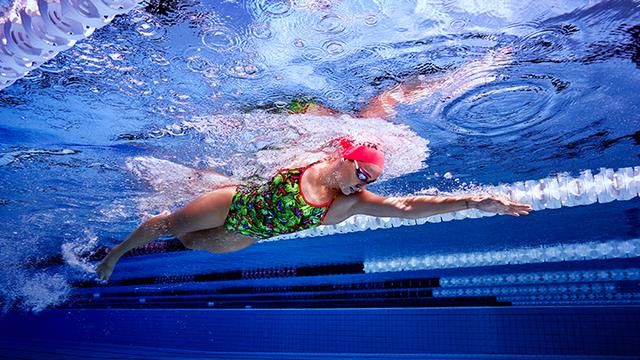
Swimmers have noticed the benefits of diving since 1950s. The breaststroke competition was the main cause of controversy in the 1956 Melbourne Olympics, because swimmers tried underwater in most competitions. Japan's Furukawa, the champion of the men's 200-meter event, spent most of the first three laps swimming underwater in the four-lap race. This practice was quickly banned after the game. The swimmer was forced to surface before starting to swim.However, in the freestyle (front crawl), butterfly and backstroke events, only after the swimmer has mastered the "underwater wave technique" (better known as the dolphin kick), does it begin to swim underwater. Here, the swimmer pushes himself forward underwater by swinging his lower body in a wave-like manner, while stretching his arms over his head to maintain a streamlined upper body posture. The amplitude of the lower body fluctuations increases from the hips to the feet, so the "waves" generated by the body are larger downwards towards the feet, producing a whip-like effect. This pushes the water back quickly, pushing the swimmer forward according to Newton's action and law of reaction.
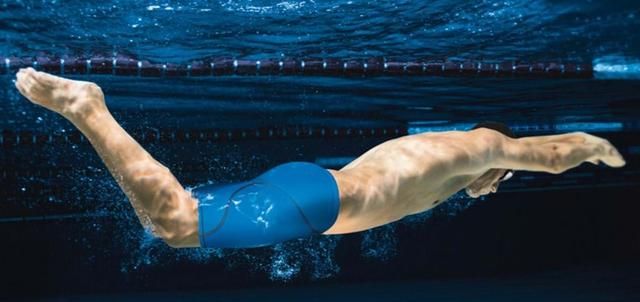
Since the 1980s, swimmers in the backstroke event have gained a significant advantage using this technique. Since the 1990s, it has also been common in the freestyle and butterfly events. This technique is so effective that the swimming management agency FINA limits its use to the 15-meter section after the start and turn. If swimmers go too far under the water, they will be disqualified from continuing the competition.However, the benefits of improving underwater wave technology are so great that swimmers still spend several hours a week training to improve this part of the game.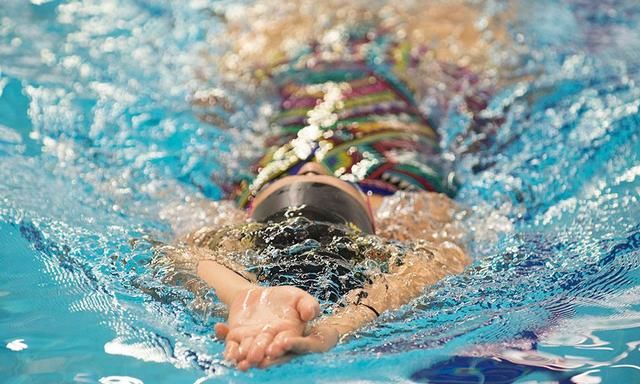
The key to successful underwater swimming
Although ongoing research efforts are aimed at finding the best techniques for different swimmers, some practices seem to be generally related to diving success.
First, swimmers who complete a full 15 meters underwater will have faster starting, turning and total race time. This effect is especially obvious in backstroke events, when swimmers make the most of the last turn of the competition (at this time swimmers usually surface faster because they are getting tired). Secondly, it is important to keep the water deeper. Swimming below the water surface will slightly reduce the wave resistance, but swimming 40-60 cm underwater can reduce the resistance by 10-20%. There are more benefits when swimming one meter or more underwater, especially when starting and turning starts are fast (as in most shorter races). Third, the best swimmers may show a faster kick frequency, although each kick is no greater than the slower swimmer. In particular, the rapid extension of the knee in the strong kick that occurs at the end of the wave motion may separate the faster swimmer from the slower underwater swimmer. Finally, although it is difficult to find in the underwater camera lens of the Olympic Games, the feet of divers swimmers may rotate inward during the strong kick of the kick, instead of staying in a straight line with the legs. This rotation allows the top surface of the foot to be oriented horizontally to the direction of swimming, just like the tail of a dolphin or whale is horizontal to the direction of swimming, producing more propulsion on the foot. Diving prime time Therefore, at the Tokyo Olympics, only swimmers are allowed to dive under water and turning conditions, and underwater cameras are used to monitor whether the athletes violate the rules. Taking full advantage of the rules of the competition, some swimmers may help them win Olympic gold medals.
# Tokyo Olympic



Send us an Email